
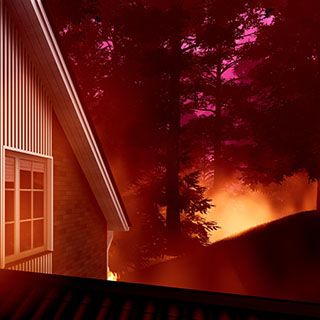
There is no doubt, wildfire season 2020 was one of the worst on record. A combination of global warming and Covid-19 left many areas of the county highly vulnerable to major fires. Last year, there were more than 57,000 fires, destroying 10.3 million acres of land. In California alone, the fires burnt 4.2 million acres of land and damaged or destroyed 10,500 structures. Sadly,31 people lost their lives.
Be prepared
If you’re concerned about wildfires in your area, now is the time to prepare. There are a number of things you can do in advance, to reduce the risk of your home catching fire when the season starts.
According to the experts, it’s often the sparks from nearby fires that are the real danger. Dead leaves, pine needles and general garden debris can easily catch fire if embers are flying round. Take the time now to clear any potential ‘fire fuel’ from around your property and garden.
Keep your outdoor area free from clutter and try to avoid flammable garden furniture. Prune back all shrubs and plants and aim to keep your lawn short. Not only will your outdoor space look great, it’ll also reduce the risk of your home becoming a statistic of fire season 2021.
Advice from the experts
So far, conditions for this year’s wildfire season are not good. Unusually dry weather and lots of vegetation will put many areas at high risk.
According to experts in Arizona, the 2021 season is expected to have ‘very severe potential’, with some fires already underway. John Truett, Arizona’s Department of Forestry Fire Management Officer has this to say…
“It’s going to be very important for the public to do their due diligence and prevention, watching their outdoor activities. It’s going to be extremely dry. It won’t take much to get ignition source going and get that fired up and spread across the landscape.”
For more information on what you can do to reduce risk this fire season, visit the National Fire Protection Association’s website HERE.
The dangers of wildfire smoke
Even if you’re not in imminent danger from fires, the smoke from wildfires can travel many miles. A recent study from Scripps Institution of Oceanography at the University of California, San Diego, found that smoke from wildfires can be up to 10 times more dangerous than other types of pollution, such as traffic emissions.
These tiny particles of smoke can travel deep into our lungs, causing a wide range of health problems, from burning eyes and runny nose, to an increase in heart attacks and strokes.
Stay safe this wildfire season with Austin Air
If you’re concerned about smoke from wildfires polluting your home, we recommend the Austin Air HealthMate Plus™. Its broad-spectrum adsorption is highly effective at removing chemicals, VOC’s and smoke, as well as viruses, bacteria, allergens and dust.
You may not be able to control pollution levels outside your home this wildfire season but investing in the Austin Air HealthMate Plus™ will ensure the air inside your home is clean and safe.
For more info on the HealthMate Plus™ click this link.


Share:
Are Your Seasonal Allergies Lasting All Year?
Will the latest tech help us fight the covid battle?