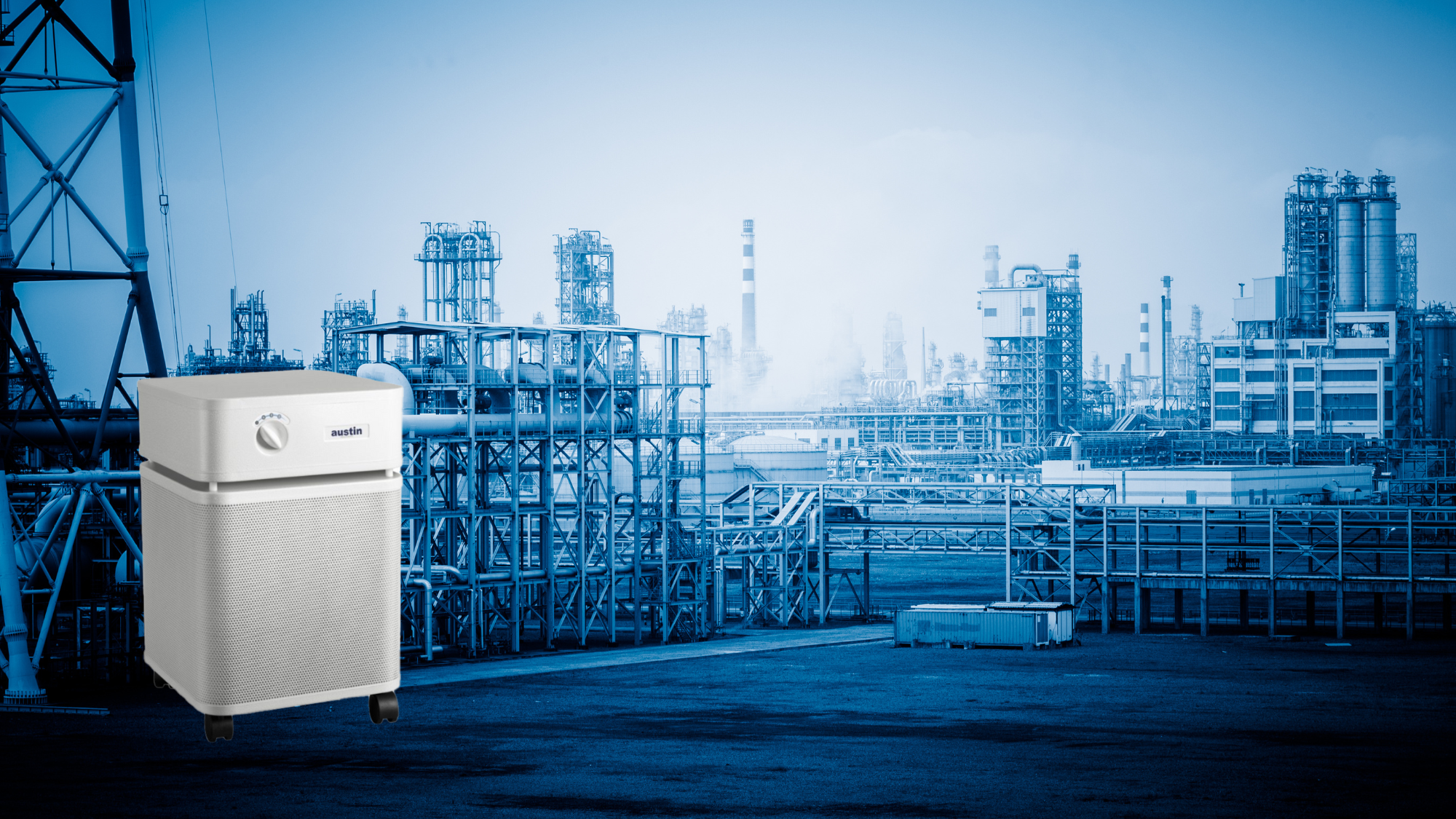
Over recent weeks, the country has been ravaged by chemical incidents and disasters. Whether it’s train derailments, factory explosions or emissions, safety from chemicals should be at the forefront of the national conversation.
As these events unfold, it’s more important now than ever to make sure the air in your home is clean. As we as a nation face these challenges, our homes can be sanctuaries – they can be places we can be certain the air is safe.
What is a chemical incident?
A chemical incident is the release of a toxic substance, potentially resulting in harm to the public and the environment. They can occur naturally, or be accidental or deliberate. These events can be sudden or have a slow onset, and they may be acute or result in disaster.
As the years go by, the public is exposed to more chemicals and toxins. As chemical use and, consequently, incidents and disasters increase, it is imperative the effects of chemicals are addressed. The most important way to do this is through air purification.
Do Austin Air purifiers protect against airborne chemicals?
The pollutants emitted in the air from these incidents can be highly toxic. However, the medical grade Certified HEPA Material technology we use in our filters is clinically proven to remove 99% of particulates and other pollutants as small as 0.1 microns. And Austin Air purifiers use a lot of Certified HEPA Material – 60 square feet to be exact. That’s far more than any other purifier on the market.
But the big question is what about the chemicals? It’s carbon that adsorbs chemicals, gasses and VOCs. Austin Air purifiers use a unique blend of activated carbon, potassium iodide impregnated carbon, and zeolite. Some of our competitors also use carbon – maybe two-to-five pounds of it. But we use up to 15 lbs. That’s a huge difference.
Another difference: we are also the only air purification system on the market that uses High Efficiency Gas Absorption, or HEGA. The HEGA cloth in the Austin Air purifiers was initially developed by the British Armed Forces in the 1970s as protection against chemical and gas warfare. It was initially used – and still is to this day – as a protective layer in military clothing and masks to protect against chemical, biological, radioactive, and nuclear (CBRN) agents. A single gram of HEGA cloth has a surface area equivalent to half the size of a football field.
Which air purifier should I get?
The Bedroom Machine offers the utmost protection. The results of two separate clinical trials show this unit to be highly effective at removing dangerous airborne pollutants from the home. According to a report by the EPA, a significant amount of Certified HEPA Material and carbon must be used in air purifiers’ filtration to avoid filters having to be changed often (every few months).
The Bedroom Machine uses medical-grade Certified HEPA Material technology, which is proven to remove up to 99% of all airborne contaminants as small as 0.1 microns. The filter’s unique carbon blend, including two types of carbon, also protects against chemicals, VOCs and gasses. In disaster situations, other air purifiers will not catch all the chemicals in the air.


Share:
Seven Smells at Work Making You Sick
Austin Air Introduces College Partner Program for Cleaner School Air