
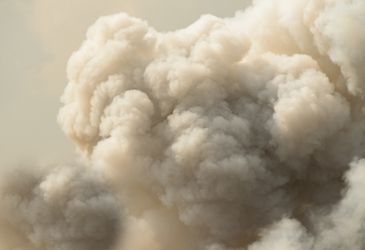
For many parts of the country, wildfire season is well under way. So we’re asking the questions, what exactly is smoke? How is it made? What’s in it? Why do some fires produce more smoke than others? And what are the dangers of smoke inhalation?
How is it made?
Smoke is created when there is not enough oxygen to burn the fuel. This is known as ‘incomplete combustion’. Each particle is far too small to see with the naked eye but when they come together, we see them as smoke.
What is it?
Smoke is a collection of tiny liquid and gas particles. 90% of smoke is made up of Carbon Dioxide and water. But it’s the remaining 10%, with its many thousands of chemicals and fumes, that creates the biggest problem. Wildfire smoke is particularly potent due to the wide range of manmade and natural materials that are burnt, this includes wood, plastics, metals, paint and chemicals.
Why do some fires produce more smoke than others?
Put simply, it depends on the heat of the fire. Super-hot fires produce a lot less smoke. Once a fire reaches a certain temperature, the Carbon Monoxide, Particulate Matter, Hydrocarbons and other VOC’s are burnt off. At this stage only water and carbon dioxide are produced.
What is Particulate Matter?
We often use the term PM2.5 and PM10 when referring to wildfire smoke. Particulate Matter (PM), is a general term used to describe all particles suspended in the air. 2.5 or 10 indicates the size. PM10 are particles larger than 10 micrometers in diameter, PM2.5 are much smaller, at 2.5 micrometers in size. And its these tiny PM2.5 that cause the most damage. PM2.5 is small enough to reach the lungs, where it can pass through the lining of the lungs and enter the bloodstream. From here, it is free to travel to other parts of the body, including the brain.
What are the dangers of smoke inhalation?
Smoke inhalation can lead to a wide range of health problems. In the short term, exposure to smoke causes breathing difficulties, burning eyes and sore throat. For people with ongoing respiratory problems, such as asthma or COPD, smoke inhalation exacerbates symptoms and increases the chances of an asthma attack.
Smoke exposure is also a real danger for people with heart disease. A number of studies show how it can significantly increase the risk of a person suffering from a heart attack or stroke.
Other studies show how PM2.5 causes inflammation in the brain, increasing a person’s chances of developing diseases such as Dementia and Alzheimer’s.
Smoke and Covid-19
A research team from Taiwan believes pollution plays a ‘direct role’ in the spread of Covid-19. They found evidence to suggest the virus can be absorbed by pollution particles and then linger in the air “for hours or days” before being inhaled deep into the lungs. Their findings could have serious implications for people living in areas currently affected by wildfires.
The Austin Air Healthmate Plus® is our number one choice for people affected by smoke from wildfires
Are you concerned about pollution levels where you live? If so, we can help. The Austin Air HealthMate Plus® uses a combination of Medical Grade Certified HEPA Material and a Carbon Blend, to remove the widest range of pollutants, including chemicals, VOC’s, bacteria and viruses*. This broad-spectrum adsorption makes it the best choice for people living in heavily polluted areas or areas affected by smoke from wildfires.
If you’d like more information on the Austin Air HealthMate Plus® follow this link.
*Covid-19 is a new strain of virus that as yet, remains untested. However, the Medical Grade Certified HEPA Material technology used in our filters is proven to remove up to 99% of all airborne contaminants as small as 0.1 microns.


Share:
Air pollution plays a direct role in the spread of COVID-19
Asthma concerns? Create a safe environment in your home