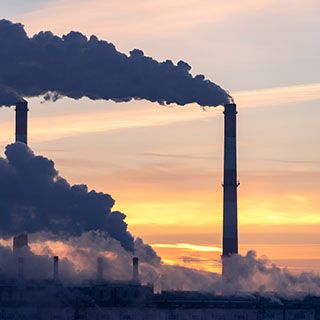
It seems the more we learn about air pollution, the more we realize it affects every aspect of our health. This week, we take a look at some of the most up to date findings, that illustrate just how damaging dirty air can be.
Air pollution affects our sense of smell.
Anosmia, more commonly known as a loss of smell, affects between 10 and 23% of Americans. That’s tens of millions of people not able to fully taste their food, detect a gas leak or smell smoke from a fire. Anosmia can seriously affect a person’s quality of life, increasing the risk of weight gain, depression and anxiety. So why are so many Americans suffering in this way?
A recent study from John’s Hopkins University found that exposure to high levels of air pollution doubles our chances of losing our sense of smell. The team focused on pollution particles smaller than 2.5 microns (PM2.5), this includes dust, dirt, soot, smoke, organic compounds and metals. Their findings show that long term exposure to these types of pollutants increases risk, particularly for vulnerable groups, such as the elderly.
Air pollution causes our brains to shrink
In another study, this time from the University of Southern California, scientists uncovered evidence to suggest that breathing tiny particles of pollution from fires, dust, traffic and industry can cause a specific part of our brain to shrink and increase our risk of developing Alzheimer’s.
The study followed 712 women in their 70’s and 80’s over 5 years. Those exposed to high levels of pollution were more likely to experience brain changes. According to lead author, Diana Younan,
“It could be that the pollution itself is getting into the brain. … These are tiny, tiny particles. They’re 30 times smaller than
Perhaps most alarming is the fact that some of the pollution levels monitored were within the EPA’s safe levels, which raises the question, are the current ‘safe’ levels safe enough?
Exposure to pollution increases the obesity risk in babies
Scientists from the University of Colorado Boulder set out to study how exposure to air pollutants can affect a baby’s growth pattern. Over time they measured weight, height and how much fat the babies carried. They found that the more a baby was exposed to pollutants before they were born, the more likely they were to be carrying extra fat at 6 months. This in turn puts them a greater risk of obesity and related diseases later in life.
According to lead author William Patterson,
“This period, either during pregnancy or shortly after birth, is a critical window of development and adverse exposures can program the infant to have a host of problems later in life,”
Austin Air, making air safe to breathe for 30 years
Dust, soot, smoke, chemicals and VOC’s, air pollution comes in many forms. Here at Austin Air we have been manufacturing Medical Grade Air Purifiers for over 30 years. In that time we have developed a range of products to address all your air quality concerns. Whether its fumes from the street, smoke from wildfires, chemicals and VOC’s after a remodel or to help you get back to normal after Covid-19, we have an air purifier that’s designed for you.
For more info on our full range of air purifiers, why not visit our SHOP page today.


Share:
Smoke, wildfires and masks. What you need to know
How to stay safe at work