We’re all well aware of the dangers of smoking and being exposed to second-hand smoke. As responsible parents, we wouldn’t dream of exposing our children to tobacco smoke. But do we recoil in horror at the thought of our children sitting next to a campfire? Or even a wood burning stove? Perhaps we should. Wood smoke contains many of the same toxins and carcinogens as cigarette smoke. Not to mention mutagens and teratogens, substances that are linked to birth defects.
Wood smoke is far more dangerous than tobacco smoke
According to the EPA, the risk of developing cancer when exposed to wood smoke, compared to tobacco smoke, is 12 times greater. And what’s more, a study from Louisiana State University found that the hazardous free radicals found in wood smoke remain active up to 40 times longer than they do in smoke from tobacco.
Now we are not suggesting for one moment that cigarettes are OK, the dangers are well and truly established. But it may be time to rethink our attitude to smoke from campfires and wood burners too.
Smoke from wildfires caused 30,000 premature deaths in the US
The dangers of smoke exposure are highlighted further in a recent study from Imperial College London. They found that smoke from wildfires caused 30,000 deaths in the US between 1999 and 2015. Most were a result of smoke inhalation that caused asthma and heart attacks.
Not all face masks protect against wildfire smoke
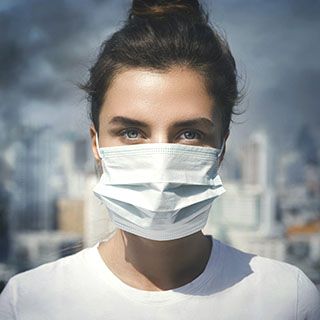
If you’re concerned about smoke from wildfires, you may be relying on a facemask to filter out smoke particles. It seems like the obvious solution now that masks have become the norm. But it’s worth remembering, not all facemasks are made equal, particularly when it comes to smoke from wildfires. Most Covid-19 facemasks are designed to stop droplets when a person sneezes or coughs, but they probably won’t be effective against smaller particles, like those found in fire smoke.
If you do have to venture outside and are at risk of exposure to wildfire smoke, NIOSH rated N95 masks offer protection against 95% of airborne particles. And N99 masks are better again, offering 99% protection.
Stay safe this wildfire season with the Austin Air HealthMate Plus™
And if you’re looking for protection inside your home this wildfire season, we recommend the Austin Air HealthMate Plus™. Using a combination of Medical Grade Certified HEPA Material, Activated Carbon, Potassium Iodide Impregnated Carbon and Zeolite, the HealthMate Plus™ removes VOC’s, formaldehyde, benzenes, chemicals, gases and odors, making it the best choice for the removal of smoke from wildfires.
If you’d like more info about the HealthMate Plus™ or other air purifiers in our range, why not visit our SHOP page today.


Share:
We’re helping kids stay safe
The far-reaching effects of dirty air