
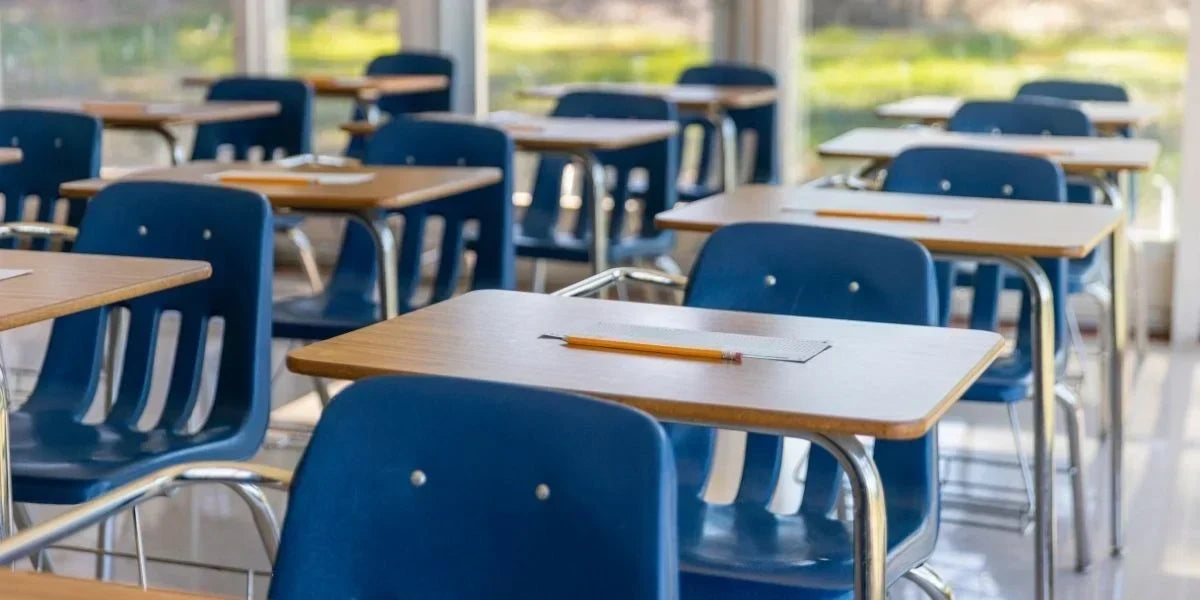
When we think of cleaning our classrooms, we typically think of harsh cleaners and bleach. But these can be harmful for our health. Here’s four ways to get a clean classroom, without harsh cleaners or bleach.
1.)Make sure the air is clean
Clean air helps reduce the spread of viruses and diseases – including Covid-19. But viruses and diseases aren’t all there is to worry about. Chemicals, gasses, VOCs, dust and allergens are also concerns and affect students’ focus, mood and performance (1) . The EPA even stated this:
“Poor IAQ can lead to a large variety of health problems and potentially affect comfort, concentration and staff/student performance.” (2) Information like this is what caused the federal government to set out to improve air quality in schools (3) .
And when looking into air filtration technologies, it’s important to consider air purifiers that are backed by the CDC, the EPA, the WHO (4) and clinical trials and use medical-grade Certified HEPA Material and activated carbon, the most effective methods of removing air pollution.
There is funding available to keep air in schools clean. Find out more here: https://austinair.com/school-funding/
2.)Use natural cleaners
We all want our classrooms to be clean. But harsh cleaners pollute the air with harmful chemicals. This is another reason why effective air filtration is important. But to be even safer, it’s important to use natural cleaning products that won’t contaminate the air in your classroom.
But how do you know if the cleaning products you’re using are safe? Well, it can be difficult. Terms like “natural,” “green” and “nontoxic” are not regulated legal definitions, so oftentimes when companies use these terms, they mean nothing. What’s worse, there are no federal laws requiring companies to list everything in their products on packaging (though California and New York passed their own disclosure laws: https://www.natlawreview.com/article/cleaning-product-manufacturers-gear-compliance-state-ingredient-disclosure-laws) .
You can find EPA backed choices here: https://www.epa.gov/saferchoice . Safer Choice helps consumers, businesses and purchasers find products that are safe for human health and the environment.
3.)Replace plug-in air fresheners and artificial scents
While air fresheners and artificial scents can mask unpleasant odors, they can be problematic and contribute to poor indoor air quality by adding pollutants to the air. The use of them is associated with heightened levels of VOCs like formaldehyde, acetaldehyde, benzene, toluene, ethylbenzene and xylenes. These are often difficult to smell or detect, but they can irritate the eyes, nose and throat and may cause headaches and nausea. The problem lies primarily in the scent, not in the way it’s dispersed, and what’s more, companies are not required to disclose what’s in these scents, so it’s difficult to know exactly what you’re putting in the air (5). Opt for diffusers with water and natural essential oils to mask unpleasant odors.
4.)Encourage student cleanliness
Educate your students about the importance of proper cleanliness. Proper handwashing is important – and washing between the fingers and for sufficient time can help keep germs out of the classroom. Proper sneezing is also important to prevent airborne germs from spreading. Discussing healthy behavior is also important. Simple things like getting enough sleep and staying hydrated can help keep the immune system strong and keep sickness out of the classroom.
References:
- https://austinair.com/new-study-finds-air-pollution-linked-to-poor-reading-and-math/
- https://www.epa.gov/iaq-schools/reference-guide-indoor-air-quality-schools
- https://www.whitehouse.gov/covidplan/?_ga=2.42579621.1657388616.1675713027-716362207.1674585180
- https://austinair.com/school-funding/#anchor1
- https://ehs.umass.edu/air-fresheners-and-indoor-air-quality
Share:
February is National Cancer Prevention Month
How to Manage Melting Snow (And Possible Mold)