
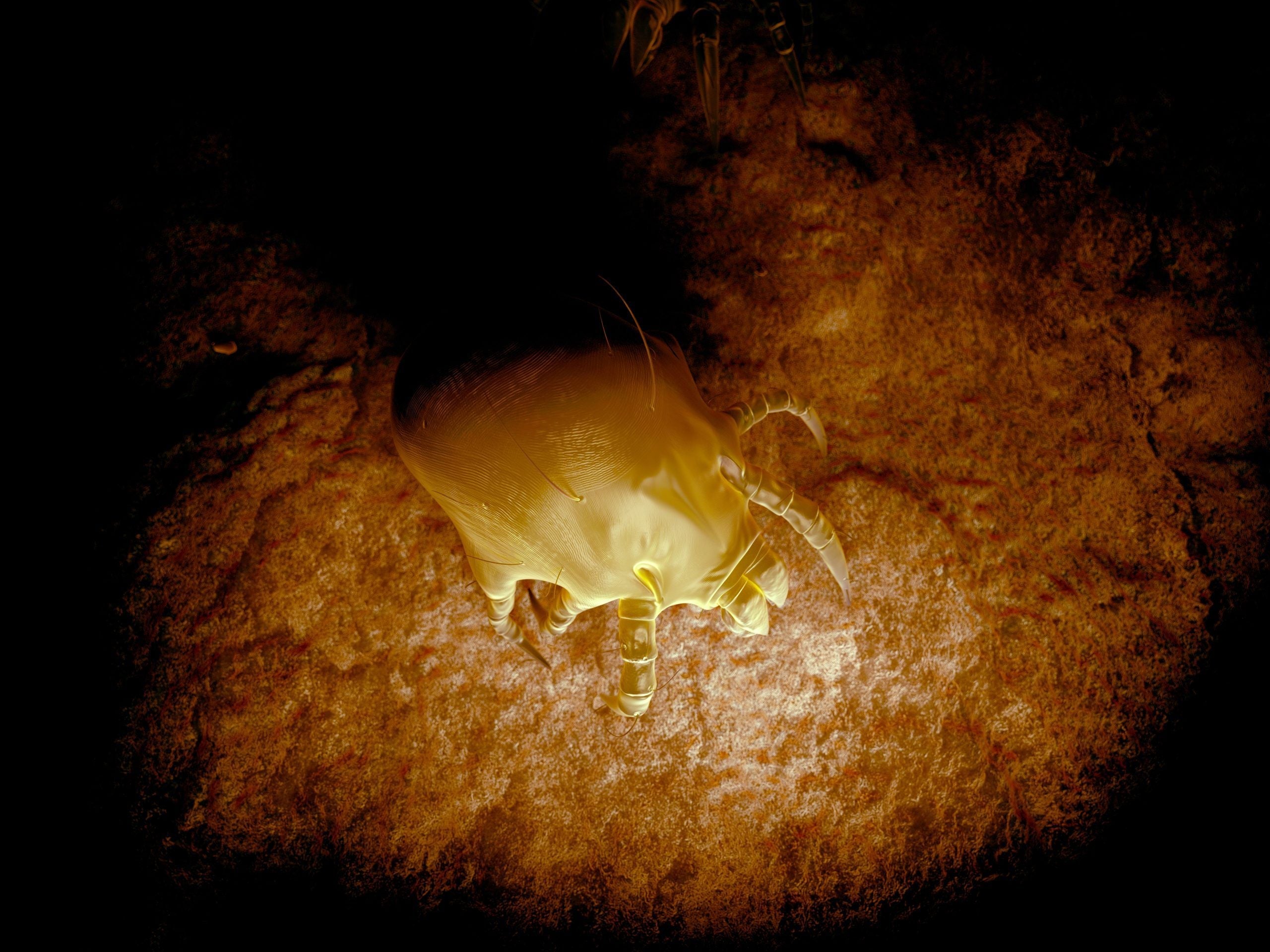
Dust mites have a way of sounding more like something out of science fiction than harsh, unpleasant reality. They’re teeny tiny bugs which live in our pillows, carpeting, upholstered furniture, and mattresses. That’s where you’ll find them multiplying and thriving in temperatures 70 degrees Fahrenheit or higher with humidity between 70-80%. Frustratingly, they can flourish in homes which appear to be clean. The particles are far too small to see and can’t usually be eradicated with normal cleaning efforts. In fact, they have a tendency to float in the air when kicked up while people are cleaning – including vacuuming and making the bed – but simple walking can also unsettle them.
Microscopic little creatures, they are around a quarter of a millimeter long. Most of the time they are harmless but for people with allergies or asthma, they can be a real problem. In fact, they’re the most common trigger for dust allergies and a common cause for asthma flare ups in children. Around 1.2 billion people across the world suffer from dust mite allergies, symptoms can range from coughing and sneezing to more severe asthma-like symptoms.
The tiny bugs are whitish with six legs who are classified as primitive because they have no eyes or developed respiratory system. On top of reproducing, their top priorities in life – which may last between two and four months – include roving, eating, and eliminating waste. It isn’t the mites we are allergic to but the microscopic particles of their waste which are part of the composition which makes dust, including other common materials like pet dander and mold spores. There is a protein in their waste which is a strong irritant for many. According to the Asthma and Allergy Foundation of America: “Unless you live in Antarctica or in an extremely dry climate, there is probably no practical way to completely rid your home of dust mites.”
The latest research from the Moredun Research Institute near Edinburgh in Scotland has recently come out with some interesting news regarding this topic. Due to developments in the recent study conducted using bee mites, doctors now have reason to believe we can use gene silencing to help diminish the nasty effects of the dust mite.
Until then, there are a few steps which you can take to help fight the irritants today:
- Remove wall to wall carpeting – this is especially important in the bedroom.
- Keep humidity levels low. This can actually be an excuse to take a break from making the bed – as it allows the bedding the air out.
- Wash your blankets and sheets in hot water (at least 130 degrees Fahrenheit) and frequently (once a week). Consider purchasing bedding and pillow cases which are allergen proof.
- Another thing which can be helpful is to think about the air in the bedroom – try installing a Certified HEPA Material filter in your air conditioning and heating system or purchase an air purifier.
As previously stated, chores like dusting and vacuuming have a way of kicking up the dust and bringing the allergens to the allergy sufferer. If possible, these jobs should be allocated to a member of the household who doesn’t suffer from these problems. If that isn’t an option, consider wearing a filter mask while tidying up. You may feel silly but it could be a huge help. It’s also helpful to complete these tasks at a time when you won’t need to use the space – giving things time to settle in your absence. Some minor changes in the household cleaning routine could be a great source of relief.
Consider reaching out to your doctor for more advice on simple things you can do to reduce your allergies, especially if asthma is also associated with your dust mite allergy. Until science can solve the problem with gene silencing, you’ll have to get a grip on those dust mites the old fashioned way. Fortunately, there are plenty of reasonably easy and economic ways to relieve those symptoms. If you know someone who has a sensitivity to dust – please pass on this information.


Share:
Hypo-Allergenic Parks in Our Cities
Happy Halloween from Austin Air!