
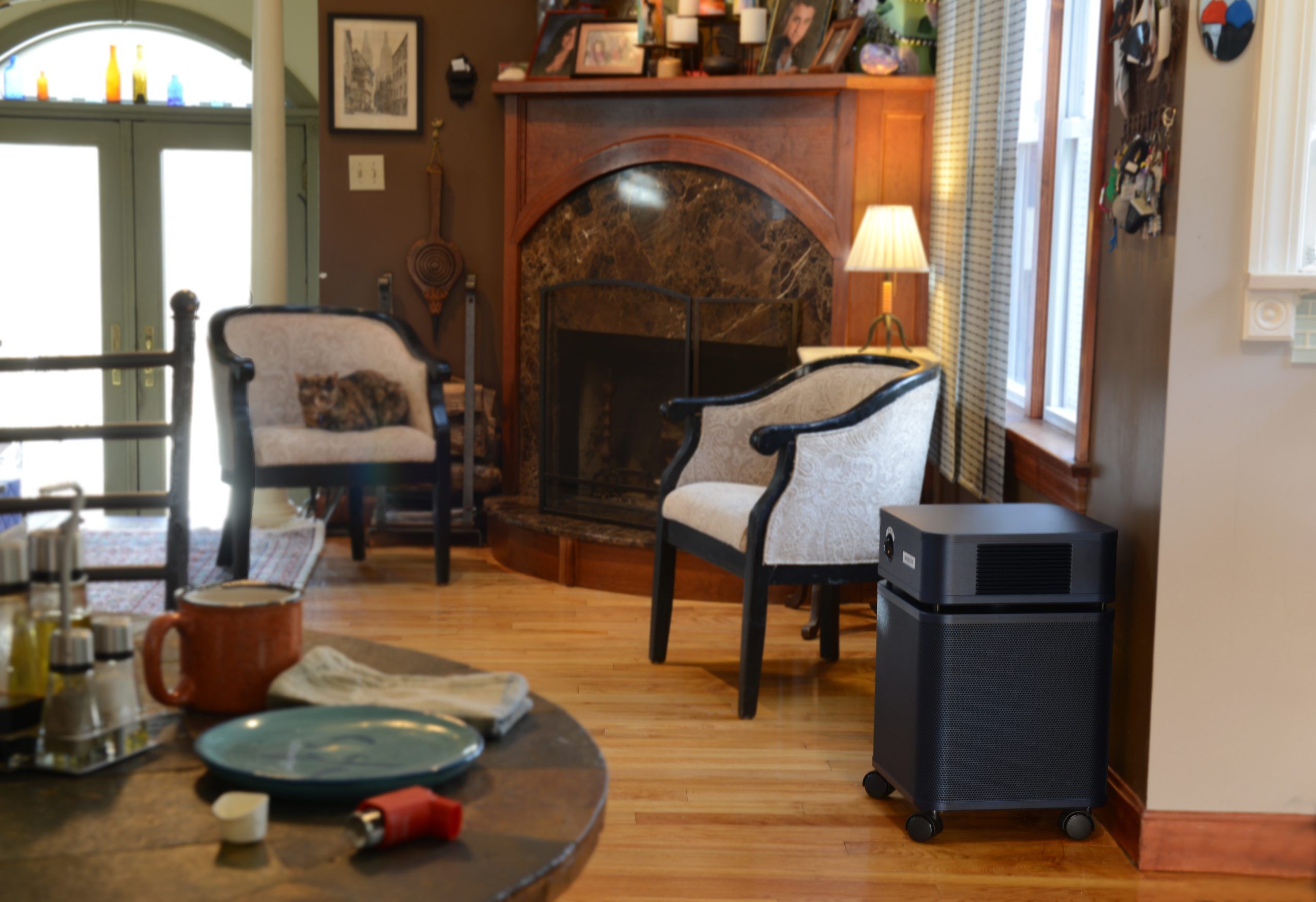
Austin Air was recently involved in a clinical trial at the renowned Johns Hopkins University in Baltimore. The aim of the study was to measure how effective certain, simple changes around the home could be at reducing levels of Nitrogen Dioxide (NO2) and improving indoor air quality.
Nitrogen Dioxide (NO2) is a gas often present in homes where there are gas stoves. It is particularly dangerous for people with COPD, as it can cause coughing, wheezing and chest tightness to increase dramatically.
In order to measure the effectiveness of various changes around the home, the research team split the study participants into three sub-groups. In the first group, the team removed gas stoves from subject’s homes and replaced them with electric stoves. In the second, ventilation hoods were fitted over the gas stoves in order to remove any pollutants produced when cooking. In the third study group, the gas stoves remained but participants received two Austin Air Purifiers with Certified HEPA Material and carbon filters. The air purifiers were to be used in the kitchen and bedroom of each participant.
The research team measured levels of NO2 immediately before making any changes, one week later, and then three months later.
It was no surprise to find out that levels of Nitrogen Dioxide dropped significantly when the gas stoves were removed and replaced with electric stoves. The results when using an Austin Air purifier were also impressive. Air quality improved significantly, as NO2 levels dropped in both the kitchen and the bedroom. Yet the use of a ventilation hood, designed specifically to remove pollutants from cooking, made no significant difference and levels of NO2 remained high.
There is no doubt that swapping a gas stove for an electric stove will reduce levels of NO2. However, for many people with respiratory problems, it may not always be possible to change the type of cooking stove they use, particularly for renters. And perhaps most importantly, gas stoves are not the only source of unwanted NO2 in our homes. Gas heaters, gas boilers, gas dryers and tobacco smoke all produce Nitrogen Dioxide. It is clear from the results of this study that running an Austin Air Purifier is an easy and efficient way to remove all types of dangerous chemicals from the home.
References
Johns Hopkins University Study
Home interventions are effective at decreasing indoor nitrogen dioxide concentrations


Share:
Air pollution linked to cancer of the mouth
In The Bleak Midwinter