
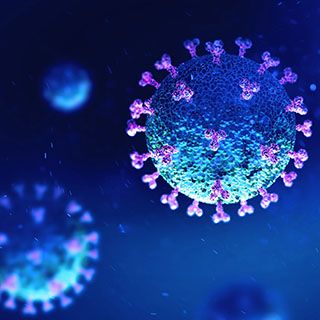
A recent study from Melbourne in Australia set out to learn more about how Covid-19 is transmitted in hospitals and what can be done to protect nurses and other members of staff. This study came about as a number of nurses became infected with the virus, even if they had not been in close contact with Covid -19 patients and were wearing the correct PPE.
Tracking airflow helps to understand Covid-19 risk
The aim of the study was to track airflow, from within the ward where patients had been treated, to other common areas in the hospital, such as the nurse’s station and corridors. The research team hoped that by tracking airflow in this way, they would understand how the virus was travelling through the hospital and infecting those people who were not in direct contact with Covid-19 patients.
Smoke was used to mimic the Covid-19 virus
For the purposes of the study, a glycerine-based aerosol (smoke) was used to mimic the virus particles. The smoke was then released into an empty patient room with the HVAC system running. The movement of the smoke in the room, the corridor and around the nurse’s station was then recorded and the airborne particles of smoke measured.
Airborne Covid-19 quickly travels to other parts of the hospital
Within minutes, smoke escaped from the patient’s room through a gap under the door and made its way, via the nurse’s station and the corridor, to the HVAC return vent. At standard HVAC settings, it took around 16 minutes for aerosols in the room to clear.
Certified HEPA Material air purifiers cleared 99% of the aerosols
The test was carried out again, but this time running portable Certified HEPA Material air purifiers in the patient’s room. Within 5.5 minutes, 99% of the aerosols had been removed from the room and the smoke near to the nurse’s station was cleared in under 3 minutes.
HVAC systems built for comfort, not air purification
This study shows that existing HVAC systems are not adequate when it comes to keeping other areas of a hospital safe. Particularly when contaminated air has to travel long distances to the HVAC return vent.
Certified HEPA Material filtration is the answer
However, portable air purifiers, that use Certified HEPA Material technology, are a cost-effective way to remove aerosols in a patient’s room. Therefore, minimizing the risk of the virus spreading to other parts of the hospital where it can infect other people.
All public spaces are at risk
This study took place in a hospital, but the same applies to all indoor public spaces. Offices, schools and public buildings cannot rely on HVAC systems alone to keep the air clean and safe. Portable Certified HEPA Material air purifiers, such as the Austin Air HealthMate Plus*, are a cost-effective way to remove airborne contaminants at source and stop them travelling to other parts of a building.
If you’d like more info on the Austin Air HealthMate Plus, visit our SHOP page today.
*Covid-19 is a new strain of virus that as yet, remains untested. However, the Medical Grade Certified HEPA Material technology used in our filters is proven to remove up to 99% of all airborne contaminants as small as 0.1 microns.


Share:
Will the latest tech help us fight the covid battle?
Government funding is a major boost for struggling restaurants