
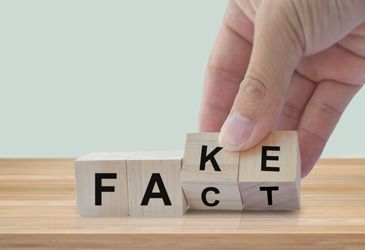
You can’t see viruses and you can’t see allergens, in fact you can’t see most air pollutants. So when you buy an air purifier, you need to be 100% confident that any harmful pollutants will be removed from your home. There’s a lot of fake news when it comes to air filtration, so it’s important you know what’s real and what’s not.
Will house plants will keep your home pollution free?
For many years, house plants were seen as a way to naturally purify the air. A 1989 NASA study shows certain plants can remove VOC’s in a laboratory setting. But a NASA lab and a home setting are two totally different environments.
More recent studies show, to effectively clean a living space, there would need to be at least 10 plants per sq. ft. That’s 5000 plants in a 500 sq. ft. apartment. Not only would this be like living in a jungle, humidity and mold would be a major issue.
The drawbacks of ionizers
Ionizer air purifiers remove pollutants by creating negative ions. Negative ions are particles charged with electricity, that attach themselves to pollution particles such as dust, dander and other allergens. Once attached, particles fall to the ground, where they can later be swept up. But, and it’s a big but, some ionizers also create ozone, which can be extremely toxic.
Salt lamps, are they worth it?
Salt lamps are made from large chunks of Himalayan salt, with a light placed inside. This combination of light and salt is thought to create negative ions, therefore removing pollutants in the same way ionizers do. However, there is no scientific evidence to prove salt lamps actually create negative ions. So although they are not causing harm, the way ionizers can, there is no proof they do any good either.
Boiling herbs to combat pollution
This year’s wildfire season has led to a surge in the number of people simmering herbs, to reduce smoke levels in their homes. Boiling herbs like rosemary and lavender releases essential oils, some believe this helps to purify the air. It sounds like a simple and cost-effective way to remove smoke and other contaminants from the environment. However, there’s a hitch… it doesn’t work. In fact, simmering herbs creates more pollution than it removes, particularly if using a gas stove.
Watch out for ‘Certified HEPA Material Type’ filters
We often see claims that ‘Certified HEPA Material type’ filters are just as effective as ‘True Certified HEPA Material’ but with a much lower price tag. Please proceed with caution, ‘Certified HEPA Material type’ filters are not regulated in the way that ‘True Certified HEPA Material’ is. True Medical Grade Certified HEPA Material must meet a certain standard, that is to effectively filter 99.97% of particles down to 0.3 microns and 99% of particles down to 0.1 microns. This lack of regulation for ‘Certified HEPA Material type’ filters means there is no guarantee they will remove any particles, large or small.
The one solution that is guaranteed
For true peace of mind, choose Austin Air. Using a combination of True Medical Grade Certified HEPA Material and a unique carbon blend, we guarantee to keep the air in your home clean and safe. To find out more about our products and what they can do for you, follow this link.


Share:
More of your questions answered
Its November and time to talk COPD