
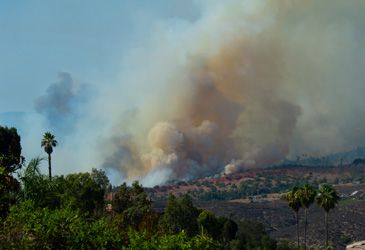
This year’s wildfire season has been one of the worst on record, and sadly it’s not over yet. A combination of climate change and the arrival of Covid-19 has left some parts of the country extremely vulnerable.
Death toll from wildfires could be far higher than we realize
At the time of writing, 35 people have lost their lives to the fires this year. But according to researchers at Stanford University, many more have succumbed indirectly. They believe more than 1200 people have been killed by wildfire smoke so far, and that’s a conservative estimate. Their analysis only looked at people over the age of 65, numbers could be as high as 3000 if we examine the broader population.
There may be more to come
Although many fires have been contained, we’d be wrong to assume the worst is behind us. Smoke doesn’t just disappear, it can linger for many weeks, moving to other parts of the country, increasing in toxicity as it travels. Smoke from fires on the west coast has been tracked to Russia and Western Europe, many thousands of miles away.
Smoke changes as it travels
Smoke from wildfires contains thousands of toxins. As well as trees and plants, wildfires burn a wide range of manmade materials such as paint, plastics, metals and chemicals. The result is a toxic mix of particles and gases that contain carbon dioxide, benzenes and formaldehyde.
Some pollutants, such as benzenes, hang around in the air for weeks and are therefore able to travel long distances. Some particles can come together and then disperse to create more particles over time. Smoke clouds can also react with sunlight to create ozone, the further the clouds travel, the more ozone is produced.
What does it do to our body?
Exposure to wildfire smoke causes immediate symptoms such as coughing and burning eyes. And for people with asthma, exposure to smoke increases the risk of suffering an asthma attack. But it’s not just our respiratory system that’s under threat. Once inhaled, tiny particles of smoke can pass through the lining of the lungs, where they are free to travel to the heart and brain. For vulnerable people, those who are already sick, this can increase their chances of having a heart attack or stroke.
Recent research also shows that exposure to smoke from wildfires causes systemic inflammation. This change to our immune system could affect the way we fight infections and viruses, including Covid-19.
Wildfire smoke and Covid-19
We still have much to learn about Covid-19 and in particular how being exposed to wildfire smoke affects the virus. However, it is fair to assume that an inflamed immune system could increase our chances of suffering the more serious complications associated with the virus, complications that often lead to loss of life.
We’re here to help
If you’re concerned about the long term effects of wildfire smoke, the Austin Air HealthMate Plus™ is our number one choice. The HealthMate Plus uses Medical Grade Certified HEPA Material and a unique carbon blend in its filter. This ensures the removal of a wide range of chemicals and gases, including pollutants that hang around for long periods of time. If you’d like more info about the Austin Air HealthMate Plus ™ visit our shop page HERE.


Share:
Got a question? We’re here to help!
More of your questions answered