
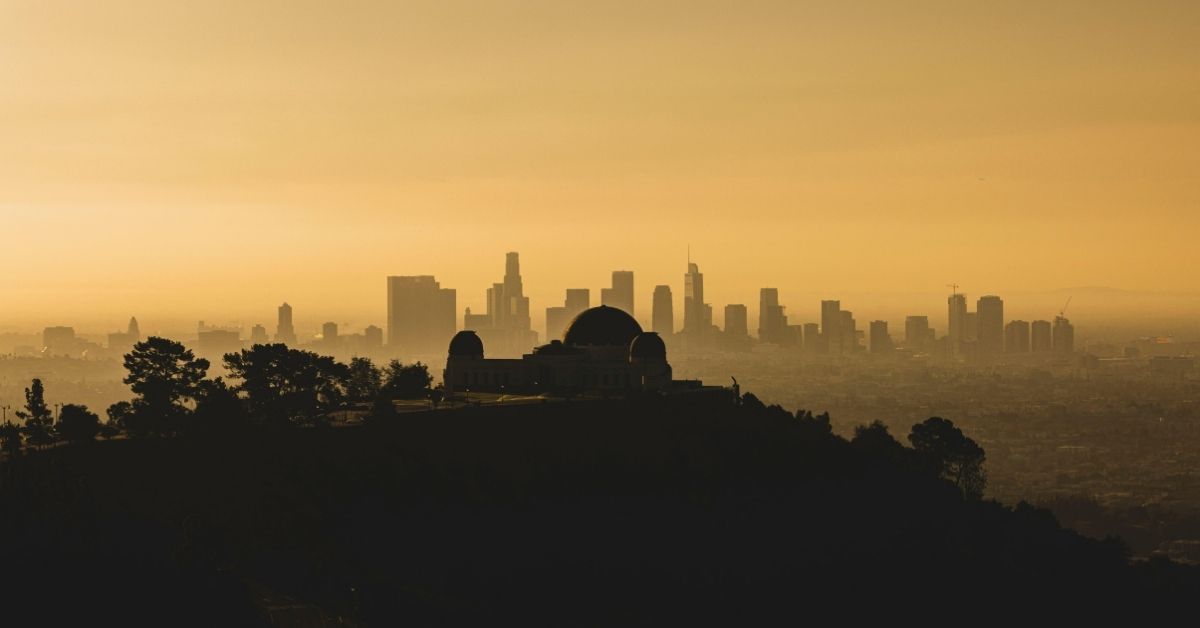
This week brought the one-year anniversary of the Palisades and Eaton wildfires that ignited across Los Angeles on January 7, 2025. They rapidly became two of the most destructive urban wildfires in U.S. history. In a matter of hours, blazes that started in dry brush and foothills leapt into neighborhoods, fueled by extreme Santa Ana winds and drought-parched conditions. By the time they were contained later that month, tens of thousands of acres had burned, more than 16,000 structures were destroyed, and at least 31 lives were lost — leaving lasting scars across communities that are still being felt today.1
Fires like these remind us how quickly disasters can unfold and how deeply they affect health, homes, and hearts. In this era of larger and more intense wildfire seasons, individuals and families are increasingly asking: what can we do now to protect ourselves — not just while the flames burn, but long after? Below, we’ll explore the latest science on post-fire contamination risks, why indoor air quality matters even after containment, and how one of the best tools for safeguarding your home environment can be part of both your preparedness and recovery plan.
The 2025 LA Fires: History, Human Cost, and Community Impact
The fires that would come to define January 2025 ignited on January 7, driven by extreme Santa Ana winds and critically dry conditions. What began as fast-moving brush fires quickly escalated into full-scale urban disasters. In the western part of Los Angeles County, the Palisades Fire tore through canyons and hillsides before spilling into residential neighborhoods, ultimately burning more than 23,000 acres. To the northeast, the Eaton Fire advanced through Altadena and surrounding foothill communities, scorching over 14,000 acres in a parallel unfolding of devastation.2
Within hours, evacuation orders expanded rapidly. Tens of thousands of residents were forced to flee — some with only minutes’ notice — as roads clogged, power was cut, and emergency alerts lit up phones across the region. Many evacuees remained displaced for weeks, unsure whether their homes would still be standing when containment was finally declared near the end of January. For too many families, the answer was no. Together, the fires destroyed more than 16,000 structures and claimed at least 31 lives, leaving entire blocks unrecognizable and communities permanently altered. Sadly, the majority of those who perished were seniors and disabled people who couldn’t flee quickly.
In the year that’s followed, the visible damage has been only part of the story. While some neighborhoods have begun rebuilding, others remain dotted with empty lots, debris, and red-tagged homes. Insurance disputes, permitting delays, and housing shortages have slowed recovery, prolonging displacement and uncertainty for thousands. For residents who returned, the sense of loss extended beyond what could be seen — lingering odors, health symptoms, and unanswered questions about what remained inside smoke-impacted homes.
As painful as this chapter has been, it also presents a critical opportunity to learn. Understanding what these fires left behind — not just on the landscape, but inside the places people live — is essential to better protecting communities in the future. That is precisely what new research, explored in the next section, has shed light on.
New Research: Indoor Air Risks Persist After the Smoke Clears
A study just published on the eve of the one-year anniversary in Environmental Science & Technology Letters sheds critical light on a dimension of wildfire impact that often goes unnoticed: indoor air quality long after a fire is extinguished.3
To better understand what residents were breathing, researchers from the UCLA Fielding School of Public Health conducted real-time field sampling in neighborhoods affected by both the Palisades and Eaton fires. Rather than relying on models or retrospective data, the team collected indoor and outdoor air samples directly from homes at multiple points during and after the fires. Sampling occurred across three distinct phases: early active burning, later active burning as containment increased, and the post-fire period after evacuation orders were lifted.
Using special air sampling tubes placed inside living spaces and just outside homes, researchers measured volatile organic compounds (VOCs) continuously over one-week intervals. Homes were carefully selected to minimize unrelated pollution sources — such as smoking or heavy traffic — allowing the team to isolate wildfire-related impacts. This approach made it possible to directly compare how outdoor smoke translated into indoor exposure over time.
What they found was striking. Even weeks after the fires were contained, VOC levels inside many homes — particularly those in or near burn zones — remained elevated compared to pre-fire conditions, and in some cases exceeded outdoor concentrations. The data suggest that smoke-impacted building materials and household contents can become ongoing sources of chemical exposure, slowly releasing pollutants back into indoor air long after visible smoke has cleared.
To counter these risks, the researchers emphasized practical mitigation strategies to help restore healthier indoor air: improved ventilation (which can be as simple as opening windows after outdoor threats have subsided), high-filtration HVAC systems (MERV 13 or higher), and portable air purifiers with both high-efficiency particulate and activated carbon filtration, like Austin Air Purifiers.
![A graphic with a pull quote from a recent study that says: “[These] results underscore an important health concern: even after wildfires are extinguished, residents may remain at risk of exposure to indoor VOCs.”](https://cdn.shopify.com/s/files/1/0625/3468/0651/files/air-quality-hazards-remain-after-wildfires-are-extinguished.jpg?v=1768002857)
Clean Rooms and the Critical Role of Air Filtration — During and After Wildfires
For years, public health agencies like the U.S. Environmental Protection Agency (EPA) have recommended creating a clean room inside the home during wildfire smoke events — a smaller, enclosed space designed to reduce exposure when outdoor air becomes hazardous.4
The concept is simple but powerful:
-
Choose a room with minimal doors and windows.
-
Keep it sealed as much as possible.
-
Run a portable air purifier equipped with HEPA and activated carbon filtration to continuously clean the air.
-
Stay cool safely — don’t use anything that would bring in outdoor air.
-
Don’t create any more smoke with cigarettes, candles, etc.
This guidance has traditionally focused on the active fire phase, when smoke visibly blankets communities and air quality alerts dominate the news. But the new UCLA study adds an important and often overlooked dimension: the need for extra measures to ensure clean indoor air doesn’t end when the flames are extinguished or evacuation orders are lifted. Instead, practices like increasing ventilation are essential for recovery.
Unfortunately, changing the ventilation in your home is generally an expensive and labor intensive activity that is likely not possible for an overwhelmed homeowner after a fire has burned their region. Portable air purifiers play a central role in this strategy and are arguably the most cost-effective impactful difference one can make during the aftermath of a wildfire sending an entire area code into chaos.
True HEPA filtration captures fine particulate matter (PM₂.₅) that penetrates deep into the lungs, while activated carbon is essential for adsorbing gaseous pollutants and odors. Together, these technologies — which are both featured in Austin Air Purifiers — help reduce both immediate smoke exposure and longer-term chemical off-gassing inside the home.

Looking Forward: What This Anniversary Asks of Us
One year after the Palisades and Eaton fires reshaped Los Angeles, the physical scars remain visible — but so do the quieter, less obvious reminders of what wildfire smoke leaves behind. As the latest research shows, the impact of these events doesn’t end when the flames are extinguished or evacuation orders are lifted. For many households, the risk simply changes form, moving indoors and lingering long after the skies clear.
In a world where wildfires are growing larger, faster, and more destructive, preparedness can no longer be limited to evacuation plans alone. It must also include thoughtful strategies for protecting indoor air — both during active smoke events and throughout recovery. Clean rooms, high-quality filtration, and informed choices about air purification are no longer niche precautions; they are becoming essential tools for safeguarding health in fire-prone regions and beyond.
In Memoriam
One year later, the passage of time has not erased the lives lost or the memories forever changed by the Palisades and Eaton fires. Homes, neighborhoods, and moments that once defined daily life were taken far too soon, and their absence is still deeply felt.
At Austin Air, we extend our heartfelt condolences to the families, friends, and communities who continue to carry this loss.
REFERENCES
1 These numbers tell the story of the Los Angeles wildfires, one year later. (2026,. January 6). AP News. https://apnews.com/article/los-angeles-wildfires-by-numbers-palisades-altadena-9c077a61ab1482638d12885db76dce49.
2 Anniversary Fact Sheet Key Facts About the Eaton and Palisades Fires. (January 2026). County of Los Angeles, California. https://file.lacounty.gov/SDSInter/lac/1199046_Eaton_Palisades_Fires_Anniversary_Fact_Sheet.pdf.
3 Yao Y, Garcia-Gonzales D, Li J, et al. (2026 January 2). Indoor and Outdoor Volatile Organic Compound Levels during and after the 2025 Los Angeles Wildfires. Environmental Science & Technology Letters. doi: 10.1021/acs.estlett.5c00919.
4 Create A Clean Room To Protect Indoor Air Quality During A Wildfire. (2025 December 30). US Environmental Protection Agency. https://www.epa.gov/emergencies-iaq/create-clean-room-protect-indoor-air-quality-during-wildfire.

Share:
Announcing Austin Air’s Dealer Of The Year: McHardy Vacuum
Subclade K: Why This Flu Season Feels Different