
Last week, I had the privilege of attending the 2026 American Thoracic Society International Conference in Orlando, Florida. More than 13,000 clinicians, researchers, pulmonologists, and healthcare professionals gathered under one roof—some of the brightest minds in respiratory medicine on the planet, united by a single mission: helping people breathe better.
It was extraordinary. It was inspiring. And in one specific way, it was deeply unsettling.
Let me explain.
The Room Was Full of the Right People Asking the Wrong Question
Asthma and COPD were everywhere at ATS 2026—in the keynote sessions, the research presentations, the hallway conversations, the exhibitor floor. These are conditions that affect hundreds of millions of people worldwide, and the urgency in that convention center was real. You could feel it.
But as I moved through those conversations—and I had many of them—I kept hearing something that stopped me cold. Researchers and clinicians, brilliant people with decades of experience, talking about patients who were "chronically triggered." Patients whose flare-ups defied explanation. Patients whose asthma seemed to spiral without obvious cause.
And more than once, I heard some version of this: "We don't always know what triggers these people."
I want to be careful here, because I have enormous respect for the medical professionals in that room. They are working tirelessly, with genuine compassion, to improve the lives of people who are suffering. This is not a criticism of their dedication or their expertise.
But we do know what triggers asthma. We have known for a long time.
The Answer Has Been in the Air All Along
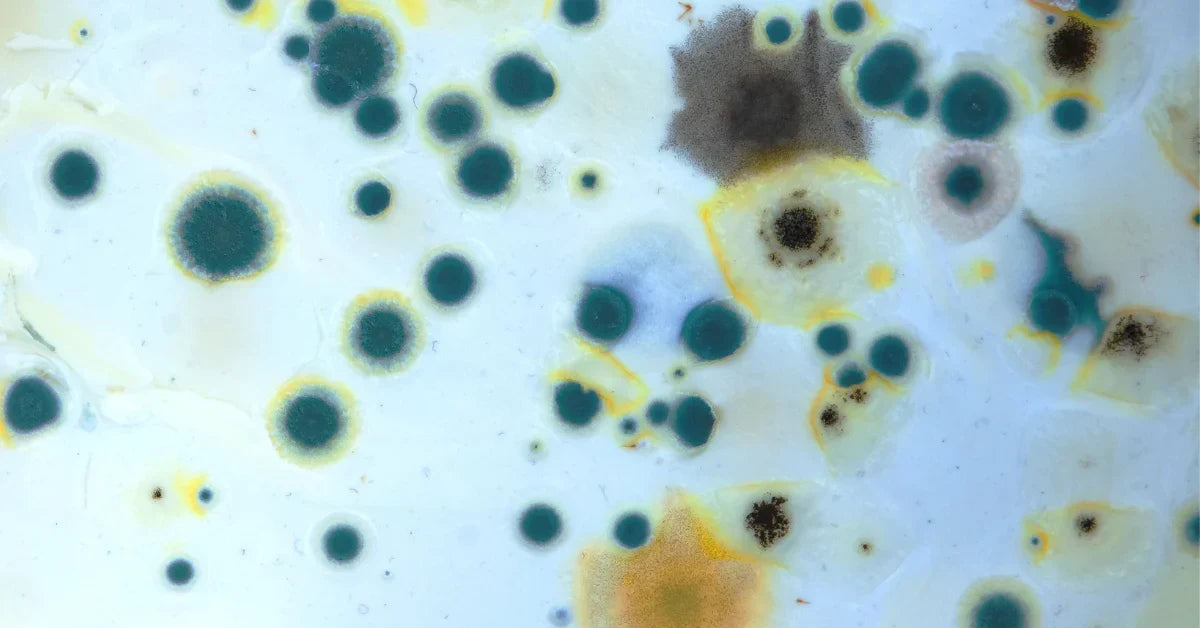
The science is not ambiguous. The EPA, the American Lung Association, the CDC, and decades of peer-reviewed research are unequivocal: airborne pollutants are among the primary drivers of asthma onset and the most consistent triggers of asthma attacks. Fine particulate matter. Volatile organic compounds. Ozone. Dust mites. Mold spores. Pet dander. Secondhand smoke. Chemical fumes. These are not mysteries. These are documented, measurable, avoidable triggers—and they live in the air we breathe every single day, including the air inside our homes.
The CDC's own data tells us that indoor air can be many times more polluted than outdoor air. The EPA ranks indoor air pollution among the top five environmental risks to public health. We spend roughly 90 percent of our lives indoors. And yet, the conversation about asthma management continues to center almost entirely on what happens after exposure—on the inhalers, the biologics, the steroids, the emergency room visits.
I am not dismissing medication. Please hear me on this. I have asthma. For someone in the middle of an asthma attack, a rescue inhaler is not optional—it is life-saving. For patients with severe asthma, biologic therapies have been genuinely transformative. The pharmaceutical companies exhibiting at ATS 2026 are doing important work, and the medicines they develop matter.
But medication manages a crisis. It does not prevent one.
Austin Air Was the Only Air Purifier Company in the Room
Here is a fact I found myself sitting with throughout the conference: Austin Air was the only air purifier company at ATS 2026.
In a hall filled with 260 exhibitors—the overwhelming majority of them pharmaceutical companies—we were it. The only company whose entire purpose is removing the airborne pollutants that trigger the conditions every single person in that building had devoted their career to treating.
Some people might see that as a competitive advantage. And from a narrow marketing perspective, I suppose it is.
But I don't see it that way. I see it as a gap. A significant, consequential gap between where the conversation about respiratory health is happening and where the solutions that could prevent so much of that suffering actually live.
If the goal is to help people breathe better—really help them. Not just manage their symptoms but reduce their exposure to the triggers causing those symptoms in the first place. That means air quality has to be part of the conversation. It has to be on the exhibitor floor. It has to be in the clinical protocols. It has to be in the patient education materials that go home with every asthma diagnosis.
We are not there yet. And that troubles me.
Prevention Is Not a Radical Idea. It's the Oldest Idea in Medicine.
The concept of prevention is not new to medicine. We vaccinate children against diseases rather than waiting to treat them. We counsel patients on diet and exercise to prevent cardiovascular disease rather than simply prescribing statins after the heart attack. We screen for cancer because catching it early changes everything.
Why should respiratory disease be different?
The ATSDR—the Agency for Toxic Substances and Disease Registry, part of the U.S. Department of Health and Human Services—has noted that medical and nursing education programs often do not fully incorporate environmental questions or exposure history into asthma management. A study they reference found that while more than half of practicing pediatricians had seen patients with health issues related to environmental exposures, fewer than one in five had been trained to take an environmental history.
One in five. In a field where the trigger is almost always something in the environment.
This is the gap I am talking about. Not a gap in caring. Not a gap in intelligence or dedication. A gap in education—in the frameworks that train clinicians to think about where disease comes from, not just how to treat it after it arrives.
The Organizations Doing the Work That Matters
This is why organizations working at the intersection of environmental science and clinical medicine education are so critically important—and why I want to specifically recognize the work of Environmental Medicine Education International (EMEI).
Founded by Dr. Lyn Patrick, ND, and Dr. Anne Marie Fine, NMD, FAAEM—both fellows of the American Academy of Environmental Medicine—EMEI is a post-graduate training program that teaches healthcare providers the clinical specialty of environmental medicine. This is precisely the education gap that needs closing. EMEI is training clinicians to take environmental exposure histories, to recognize when a patient's symptoms are being driven by what they are breathing, eating, and absorbing from their environment—and to act on that knowledge. They are doing the hard, essential, largely unheralded work of building a generation of clinicians who understand that the environment is not a background detail in a patient's health story. It is often the main character.
The National Association of Environmental Medicine has identified EMEI as the premier Environmental Medicine Educational Program offered in the United States. That recognition matters. And the broader medical community needs to pay attention.
If you are a clinician reading this, a pulmonologist, a pediatrician, an allergist, a primary care physician, a nurse practitioner—I want to ask you something directly: when did you last take an environmental exposure history from a patient with asthma? When did you last ask them what is in the air in their bedroom? Whether they live near a highway, an industrial facility, or an area affected by wildfire smoke? Whether their home has mold, or whether they are using chemical cleaning products that off-gas VOCs into the air their children breathe?
If those questions are not yet part of your standard intake, EMEI's year-long clinical training program is the place to start. It is rigorous, it is practical, and it is built by clinicians for clinicians. It will not replace what you already know. It will fill in the part of the picture that most medical education left out. You can learn more and enroll at emeiglobal.com.
And once you start asking those questions, your patients are going to need answers—not just awareness, but real, actionable solutions they can implement in their homes today. That is where we come in. Many clinicians who have made the shift toward environmental medicine find it valuable to become an Austin Air dealer or affiliate, so they can recommend a clinically proven, independently tested solution in the same conversation as the diagnosis. It closes the loop between education and action in a way that genuinely changes patient outcomes. If that interests you, we would love to talk.
The work of prevention does not happen in a hospital. It happens in the homes, schools, and communities where people actually live and breathe — and it starts with clinicians who know the right questions to ask. EMEI is teaching those questions. We need more of you willing to learn them.
What We Know, and What We Owe to the People Who Are Suffering
Here is what I believe, and what Austin Air's thirty-five years (twenty-five years of clinical research) supports:
For the vast majority of people with asthma and COPD, chronic triggering is not a mystery. It is an exposure problem. The triggers are in the air. And when you remove them—when you consistently, reliably clean the air in the spaces where someone sleeps, where they eat, where their children play—you reduce flare-ups. You reduce hospitalizations. You reduce the need for rescue medication. You improve quality of life in ways that no pharmaceutical intervention alone can fully achieve.
Eight independent clinical trials, conducted at institutions including Johns Hopkins University and Cincinnati Children's Hospital, have documented these outcomes in real patients living in real homes. This is not theory. This is evidence, published in peer-reviewed journals, demonstrating that when the air is cleaner, people breathe better and stay healthier.
What we owe to the people sitting in those hospital waiting rooms, managing their asthma on medication alone, wondering why they keep getting worse despite doing everything their doctor told them — what we owe them is the full picture. The whole story. Not just the part that comes in a prescription bottle, but the part that requires looking at the air in their bedroom, their living room, their child's school.
A Call, Not a Criticism
I left Orlando energized and frustrated in equal measure. Energized because the commitment in that room was real—thousands of people who have dedicated their professional lives to helping patients breathe. Frustrated because the tools that could prevent so much of what they are treating were largely absent from the conversation.
This is a call for more. More education for clinicians about environmental triggers. More integration of air quality into asthma action plans. More collaboration between the medical community and the environmental health community. More honesty with patients about the role that the air in their homes is playing in their respiratory health.
And more voices like the ones doing environmental education and awareness work—organizations and advocates who understand that the path to better respiratory health runs directly through cleaner air.
The science is settled. The triggers are known. The solutions exist.
Now we need the conversation to catch up.


Share:
They Deserved More Time: Honoring Those We Have Lost to Asthma and Anaphylaxis
The Most Tested. The Most Trusted. Why That Matters More Than Ever.