
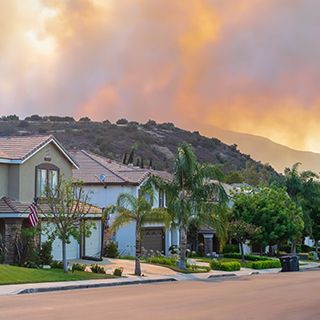
Over recent years we’ve seen a major increase in the number of wildfires in western states. Fires are burning bigger, faster and hotter than ever before. And although residents are doing all they can to stay safe, is this enough?
Steps you can take to keep smoke out
On days when smoke is bad, people are advised to stay home, with the windows and doors shut. If the HVAC systems has a fresh air option, it should be closed off. Placing damp rags at the base of windows and doors will also help to keep the smoke out. And to minimize other pollutants in the home, aerosols, incense, scented candles and cooking, particularly broiling and frying, should all be avoided.
Effective filtration cuts pollution by half
Even with these extra precautions in place, the question is, are you still safe? A team of scientists from the University of California, Berkeley, looked at data from 1400 air sensors inside the homes of people living in San Francisco and Los Angeles during fire season. They managed to collect a total of 2.4 million hours of data on wildfire days. They found that using effective indoor air filtration, as well as keeping windows and doors sealed shut, cut the amount of PM2.5 pollution by half.
According to senior author Allen Goldstein,
“While the particulate matter indoors was still three times higher on wildfire days than on non-wildfire days, it was much lower than it would be if people hadn’t closed up their buildings and added filtration,”
Wildfire smoke is the worst type of pollution
The scientists are still working to determine the exact chemicals present in wildfire smoke. But it is clear that the very nature of wildfires, burning everything and anything in their path, results in a particularly toxic mix of chemicals and pollutants.
The dangers of smoke in pregnancy
The dangers of this toxic mix are made very clear in another study, this time from a team at Stanford University. They found that exposure to smoke from wildfires is having a significant impact on the number of babies born early. The study looked at preterm birth statistics between 2007 and 2012 and found that the more a mother was exposed to wildfire smoke, the more likely she was to give birth early.
According to Sam Heft-Neal, the lead author on the study,
“We found that a week’s worth of smoke exposure was associated with a 5% increased risk and a month’s worth was associated with a 20% increase in preterm births,”
The Austin Air HealthMate Plus™ protects against smoke from wildfires
As each year passes, we are seeing longer and more challenging fire seasons, increasing the need for effective indoor air filtration. If you’re looking for protection inside your home this wildfire season, we recommend the Austin Air HealthMate Plus™. Using a combination of Medical Grade Certified HEPA Material, Activated Carbon, Potassium Iodide Impregnated Carbon and Zeolite, the HealthMate Plus™ removes the widest range of pollutants, including VOC’s, formaldehyde, benzenes, chemicals, gases and odors, making it the best choice for the removal of smoke from wildfires.
If you’d like more info about the HealthMate Plus™ or other air purifiers in our range, why not visit our SHOP page today.


Share:
A small increase in air pollution linked to serious mental illness
High level of chemicals found in kindergarten classrooms