
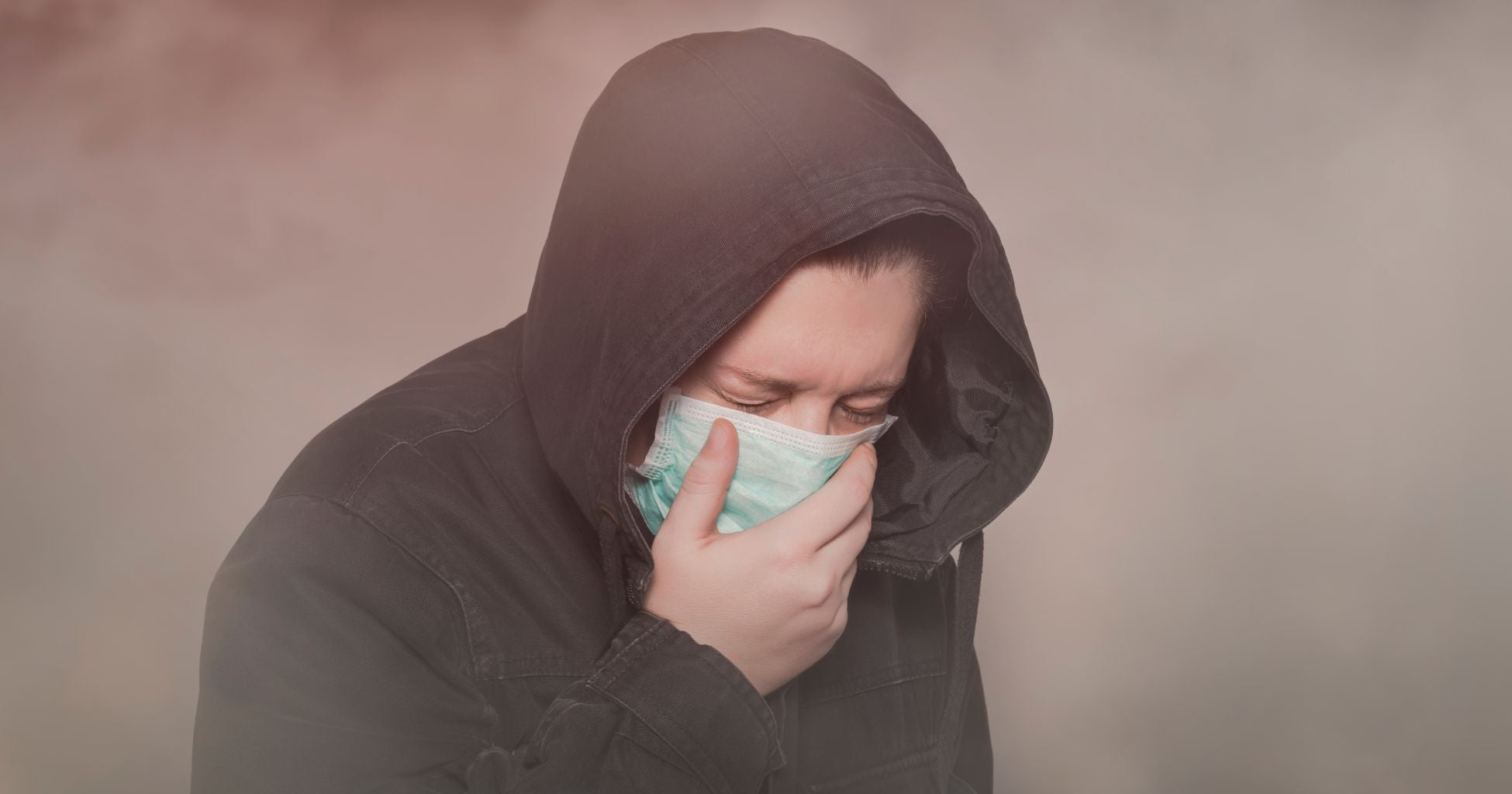
In today’s modern world, the quality of the air we breathe has become a critical concern. For those of us in cities or suburbs, urbanization and highways shape the landscape and bring along pollutants. In rural regions, it’s industrial farming practices and mining activity that majorly impact the air quality. And with wildfires burning hotter for longer and in more places, entire regions are exposed to air quality alerts.
Polluted air is linked to a range of health problems. The specific health effects depend on the type and concentration of pollutants present in the air, but the World Health Organization (WHO) estimates that household and ambient air pollution contribute to 6.7 million premature deaths annually.1
In this blog post, we delve into the health effects of air pollution and some of the most common culprits.
How Does Air Pollution Affect Your Health?
Poor air quality contributes to early mortality through various mechanisms affecting the respiratory and cardiovascular systems. Exposure to air pollution leads to both acute (sudden and severe in onset but potentially short term) and chronic (long-developing health conditions that may not be curable) health conditions. Below are some ways in which air pollution contributes to mortality:
Inflammation: Exposure to air pollutants, such as particulate matter (PM) and ozone (O3), can cause inflammation in the respiratory and cardiovascular systems, as well as other organs. This inflammation can exacerbate respiratory diseases like chronic obstructive pulmonary disease (COPD) and cardiovascular issues that lead to heart attack and stroke.2
Reduced Lung Function: Prolonged exposure to certain pollutants, especially fine particulate matter (PM2.5), can lead to a decline in lung function over time, making individuals more susceptible to respiratory illnesses. PM2.5 can also cross the blood-brain barrier and cause brain damage.3
Increased Blood Pressure: Pollutants, particularly from traffic-related air pollution (TRAP), like nitrogen dioxide (NO2), O3, and PM have been linked to elevated blood pressure, a risk factor for cardiovascular diseases.
Formation of Atherosclerosis: Long-term exposure to air pollution has been associated with the development of atherosclerosis (hardening and narrowing of the arteries), contributing to cardiovascular events like heart attack and stroke.
Oxidative Stress: Exposure to pollutants can lead to oxidative stress, causing damage to cells and tissues. This oxidative damage is implicated in the development of various health conditions, including stroke and cancer. It can also speed up the body’s aging process.4
Cancer: For some people, exposure to air pollution is on par with smoking cigarettes and leads to lung cancer. Air pollution has also been linked to the development of breast cancer.56
The increase in premature death due to air pollution is generally associated with chronic diseases that result from prolonged exposure. But, even short-term exposure can have an intense negative impact. One study showed that otherwise healthy teenagers experienced an irregular heartbeat within hours of short-term exposure to air pollution.7

What Are The Most Common Air Pollutants?
Although the exact pollutants vary from one area to another, and the amounts can change with the weather, certain culprits are common throughout most parts of the world.
Particulate Matter (PM): Fine particles with a diameter of 2.5 micrometers or smaller (PM2.5) can penetrate deep into the respiratory system and even the bloodstream. There are indoor and outdoor sources of PM2.5, including combustion from cars and fireplaces, as well as industrial practices.
Volatile Organic Compounds (VOCs): Contributing to indoor and outdoor air pollution, VOCs originate from sources such as vehicle emissions, industrial processes, and household products like paints and cleaning agents. Prolonged exposure to VOCs has been linked to increased risks of cancer, neurological disorders, and worsening of existing health conditions.
Wildfires: The intensity and scale of wildfires can result in prolonged exposure to high levels of smoke over large geographic areas, causing health hazards for both local communities and distant populations downwind. Wildfire smoke contains contaminants like PM2.5, VOCs, and polycyclic aromatic hydrocarbons (PAHs).
Fertilizers: Fertilizers from industrial farming contribute to air pollution primarily through the process of volatilization – when it evaporates and reacts with other pollutants in the atmosphere to form fine particulate matter (PM2.5) and ground-level ozone.
Government agencies and citizen watchdog groups are trying to mitigate the impacts of these substances with usage limits and other controls, but even levels that are deemed “safe” can negatively impact health. The Union for International Cancer Control (UICC) estimates that 99% of the world’s population is breathing unsafe air.8

Who Is Most Impacted by Air Pollution?
Everyone’s health is impacted by air pollution. In fact, on February 7, 2024, the Environmental Protection Agency strengthened the National Ambient Air Quality Standards for Particulate Matter (PM NAAQS) to “protect millions of Americans from harmful and costly health impacts, such as heart attacks and premature death.”9
But not everyone is impacted in the same way. Babies, children, and seniors are particularly vulnerable to the health effects of air pollution. Infants and kids may experience developmental issues, which will have lifelong implications. Older folks may face increased mortality due to pre-existing health conditions, which are worsened by air pollutants.
Additionally, individuals with chronic health conditions are more susceptible to the negative impacts of poor air quality. Sadly, it can prove to be a vicious cycle – as someone may develop a chronic condition from air pollution exposure and then be more sensitive to additional exposure, worsening their underlying disease.
What Can You Do About Air Pollution?
Reducing air pollution to mitigate the impact of poor air quality on mortality will require a large-scale effort across the planet. Success will require regulatory measures, transitioning to cleaner energy sources, and implementing public health interventions for those who can’t escape exposure. Which may leave you wondering – what can you do?
Until there are major changes to stop air pollution at the various sources, you can control the air in your home or workplace with an Austin Air cleaner – using a combination of Certified HEPA Material and activated carbon to filter out over 99% of everyday pollutants, including PM, VOCs, wildfire smoke, as well as mold and allergens like pollen and pet dander. Austin Air is the only clinically proven air cleaner on the market – with demonstrated success helping asthmatics and COPD sufferers.
REFERENCES
1 Household air pollution. (2023, December 15). World Health Organization. https://www.who.int/news-room/fact-sheets/detail/household-air-pollution-and-health.
2 Grunig G, Marsh LM, Esmaeil N, et al. Perspective: ambient air pollution: inflammatory response and effects on the lung’s vasculature. Pulm Circ. 2014 Mar;4(1):25-35. doi: 10.1086/674902.
3 Li W, Lin G, Xiao Z, et al. A review of respirable fine particulate matter (PM2.5)-induced brain damage. Front Mol Neurosci. 2022 Sep 7;15:967174. doi: 10.3389/fnmol.2022.967174.
4 Pizzino G, Irrera N, Cucinotta M, et al. Oxidative Stress: Harms and Benefits for Human Health. Oxid Med Cell Longev. 2017;2017:8416763. doi: 10.1155/2017/8416763.
5 Pro Publica. (2021, November 2). Can Air Pollution Cause Cancer? What You Need to Know About the Risks. Pro Publica. https://www.propublica.org/article/can-air-pollution-cause-cancer-risks.
6 High levels of particulate air pollution associated with increased. (2023, September 12). National Institutes of Health (NIH). https://www.nih.gov/news-events/news-releases/high-levels-particulate-air-pollution-associated-increased-breast-cancer-incidence.
7 He F, Yanosky JD, Fernandez‐Mendoza J, et al. Acute Impact of Fine Particulate Air Pollution on Cardiac Arrhythmias in a Population‐Based Sample of Adolescents: The Penn State Child Cohort. Jour of Amer Heart Assoc. 2017 Jul 27.;11:e026370. doi: 10.1161/JAHA.122.026370.
8 Cancer and air pollution. (n.d.). Union for International Cancer Control. https://www.uicc.org/what-we-do/thematic-areas/cancer-and-air-pollution.
9 Final Reconsideration of the National Ambient Air Quality Standards for Particulate Matter (PM). (2024, February 7). US EPA. https://www.epa.gov/pm-pollution/final-reconsideration-national-ambient-air-quality-standards-particulate-matter-pm.


Share:
Air Pollution Exposure in Pregnancy Impacts Newborn Health
Women’s History Spotlight: Dr. Doris J. Rapp