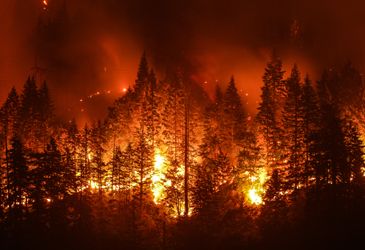
Even before the fires started to burn, Covid-19 was having an impact on this year’s wildfire season. Earlier this year, in California, all prescribed burns were suspended due to the virus. Training and vegetation clearance were also proving difficult to manage, as staff practiced social distancing or were absent from work with virus symptoms. In Montana, a project to ensure homes were more fire resistant, was put on hold due to the pandemic.
More fires in 2020
Early data suggests this year’s season is going to be particularly difficult. The number of fires in some areas is already far higher than the whole of last year. In 2019, Cal Fire, the California Department of Forestry and Fire Protection, were called to over 1500 fires. By the end of June this year, they had already attended more than 2700 fires.
And in some states, emergency services are fully stretched, as fires rage out of control and cases of Covid-19 spike.
Smoke from wildfires makes us more vulnerable to infection
Wildfire smoke can irritate the lungs, causing inflammation, it can also alter our immune response, making us more vulnerable to respiratory infection.
Smoke from fires increases flu risk the following winter
This theory is supported by a study published on line at ScienceDirect. The data shows areas that experienced high levels of pollution due to wildfires, also saw an increase in the number of influenza cases months later. Does the same apply to Covid-19? It’s too early to say but it may be that people exposed to wildfire smoke this summer are at increased risk of influenza and Covid-19 this winter.
Stay safe with a ‘Clean Room’ in your home
If you live in an area affected by wildfires, you may want to follow these steps to create a ‘Clean Room’ in your home, to protect you and your family from wildfire smoke.
Choose a room in your home that is big enough for the whole family to spend time in.
Close windows and doors in the room, to prevent smoke from entering. But remember, you may need to evacuate at short notice, so ensure you can leave quickly and easily.
Keep cool, with fans or air conditioning. If your AC has a ‘fresh air’ option, keep this closed or turn it off. You want to prevent all outdoor air from entering your clean room.
Run a portable air purifier such as the Austin Air HealthMate Plus, to effectively remove any pollutants that do find their way into the room.
The Austin Air HealthMate Plus is the number one choice for wildfire smoke
With its broad-spectrum adsorption, the Austin Air HealthMate Plus removes a wide range of the chemicals and gases that are often present in areas affected by wildfires.
NASA study tests Certified HEPA Material on ultrafine particles
The Medical Grade Certified HEPA Material used in the HealthMate Plus is also highly effective at removing 99% of all airborne viruses* and bacteria. According to one study from NASA, Certified HEPA Material filters are capable of capturing ultrafine particles less than 0.01 microns in size, far smaller than the Coronavirus.
Look after your lungs with Austin Air
As we adapt to a more socially distanced life, we must accept Covid-19 may be around for some time. More than ever we need to look after our lungs, particularly those of us with ongoing health issues. If you would like to learn more about the Austin Air HealthMate Plus and how it can help protect you and your family, follow this link.
*Covid-19 is a new strain of virus that as yet, remains untested. However, the Medical Grade Certified HEPA Material technology used in our filters is proven to remove up to 99% of all airborne contaminants as small as 0.1 microns.


Share:
Are you ready to send your children back to school?
At last, some good news to come out of lockdown!!