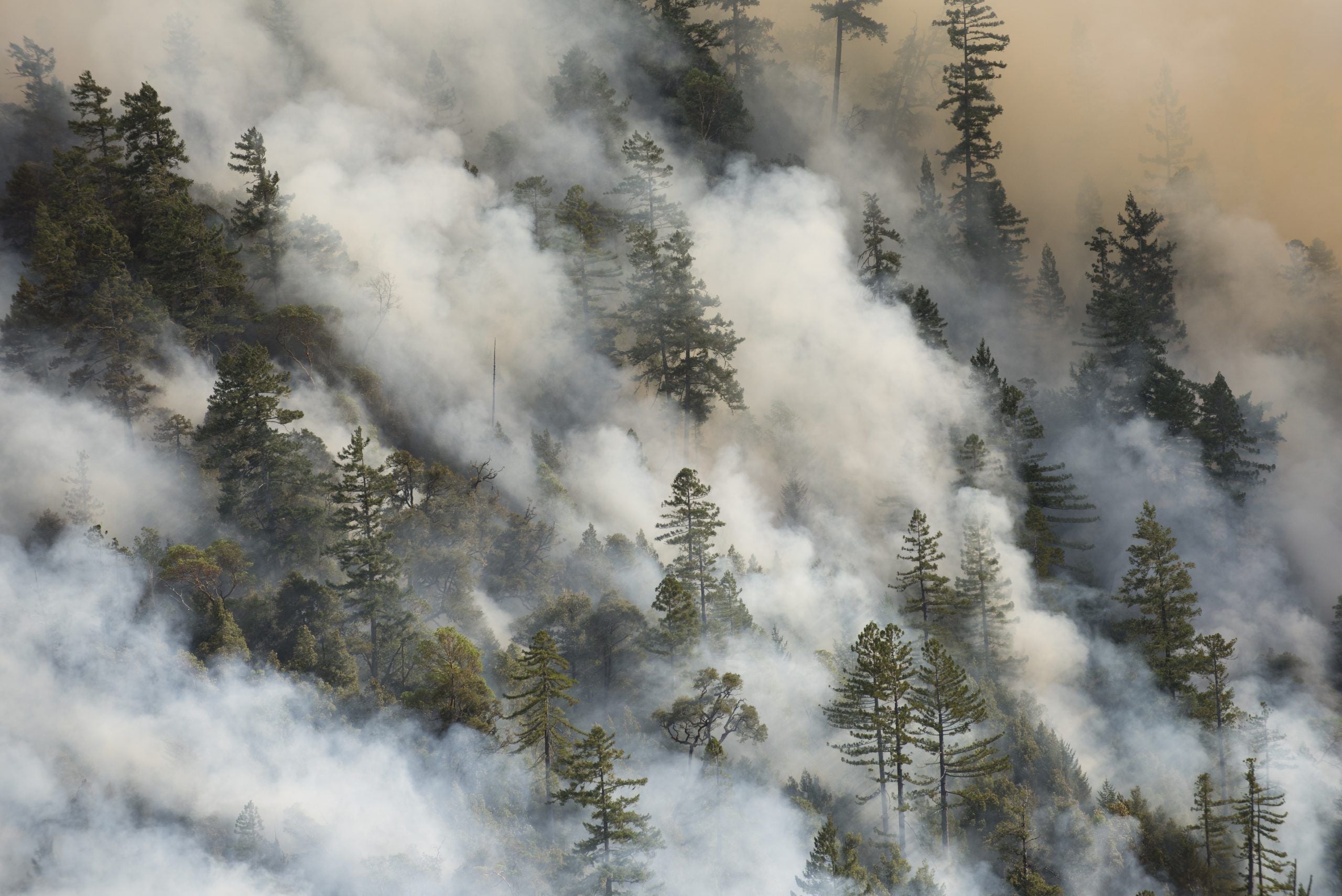
We have been following the news on the California wildfires as they spread across the West coast, causing major disruption and health problems for local residents. According to the latest reports, the fallout from the fires will travel much further than originally thought, affecting the health of people living on the East coast too.
Many people suffer from respiratory problems when there is smoke in the air. Shortness of breath, coughing and wheezing are common when smoke is inhaled directly. But exposure to smoke can also damage our health in a more subtle, indirect way. When solid matter burns, it leaves behind microscopic particles, this mixes with moisture in the air to create Particulate Matter (PM). The PM is so small it can lodge itself in the lungs, affecting heart and lung health. The fine particles can also cause inflammation in the body that can lead to blood clotting. Exposure to PM in this way increases the risk of heart attacks and strokes in the future.
Do you feel you are suffering the effects of poor air quality in your area? If possible avoid spending time outdoors, stay at home with your windows and doors closed. If you do have to venture out, try to keep outdoor physical activity to a minimum.
If you’re looking to improve the quality of air in your home as a result of the forest fires, we’re recommending the Austin Air Healthmate Plus HM450, the Certified HEPA Material and carbon filter impregnated with potassium iodide is the best choice for removing wood burning smoke, formaldehyde and other harmful VOC’s. Visit our Shop Now page to learn more about the Austin Air Healthmate Plus and what it can do for you.

Latest Stories

View all

Your Back-to-School Respiratory Reset: Get Ahead of Cold and Flu Season

Your Back-to-School Respiratory Reset: Get Ahead of Cold and Flu Season

School season is on its way in full swing; You have a head start, so use it. Cold and flu season in North America usually builds through the fall and peaks between December and February—which makes late summer the ideal time to build resilience, not scramble for it.¹ Your defenses aren't fixed. Sleep, food, movement, and the air you breathe measurably change how easily you catch—and shake off—respiratory bugs. There are five factors you can control starting today: Detox your home's air, protect sleep, feed the immune system, move every day, and switch to safer cleaners. It's simple and family-friendly. No doctor's appointment or big budget required. Most of it you can do with your kids this week. Cleaner indoor air ties it together. It's the backdrop to everything else—and where the free Parent-Teacher Toolkit and the 8-phase Immunity Machine come in.


Read moreabout Your Back-to-School Respiratory Reset: Get Ahead of Cold and Flu Season

New CDC Mold Data (2026): What It Really Means

New CDC Mold Data (2026): What It Really Means

The first CDC study to measure invasive mold disease—who’s actually at risk, and what it means for the air in your home. In late July 2026, the CDC published the first systematic estimate of how often invasive mold disease occurs in American hospitals. Researchers reviewed 968 possible cases at four Atlanta-area hospitals between 2020 and 2024 and confirmed nearly 450 of them as invasive mold disease. This disease is a serious infection in which mold moves from the airways into the lungs, sinuses, skin, or bloodstream, . ¹

Read moreabout New CDC Mold Data (2026): What It Really Means

The Travesty No One Is Reporting: Schools Are Throwing Away the Air Purifiers Our Kids Still Need

The Travesty No One Is Reporting: Schools Are Throwing Away the Air Purifiers Our Kids Still Need

Five or six years ago, putting air purifiers in classrooms was front-page news. Today those same machines are being sold on eBay, stacked in storage sheds, and left at the curb for the garbage truck—while asthmatic children sit in the very rooms they were bought to protect. Here is why every parent and teacher should be paying attention.

Read moreabout The Travesty No One Is Reporting: Schools Are Throwing Away the Air Purifiers Our Kids Still Need