
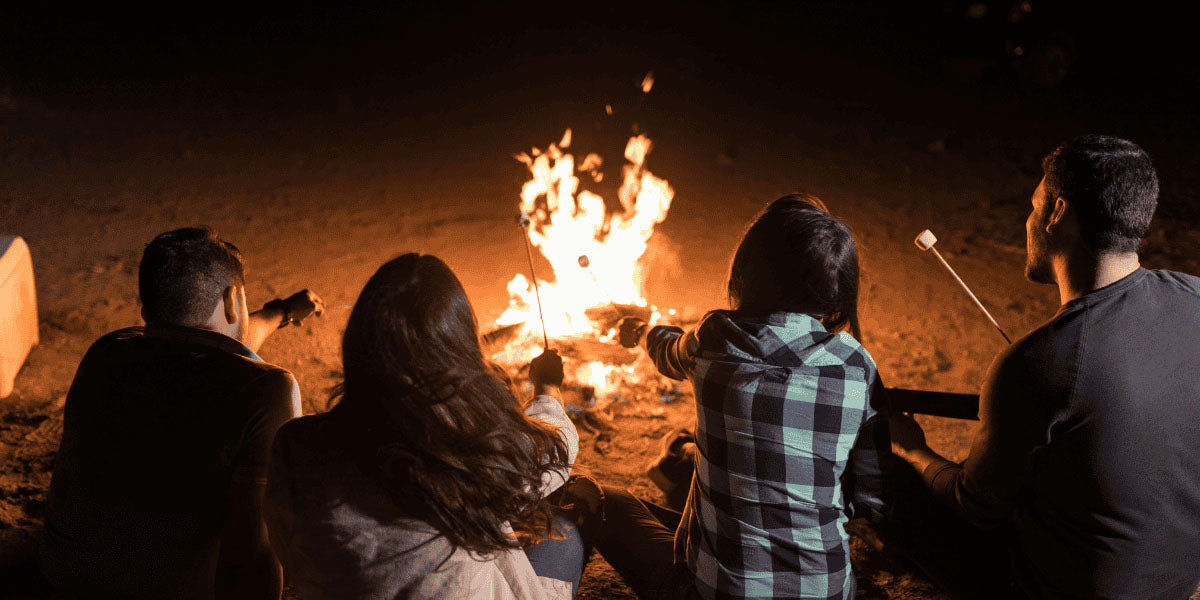
As Labor Day rolls around, we mark the unofficial end of summer. Schools are back in session across the country, evenings are getting cooler, and many of us are sneaking in those last outdoor gatherings before fall fully sets in.
Bonfires are a highlight of the season—not just for summer nights but for crisp autumn evenings too. Whether you’re soaking up the last warm days of summer or embracing sweater weather by the fire, it’s important to remember that bonfire smoke can affect your lungs.
We first wrote about this for Memorial Day 2024 and it’s so important, we decided to revisit the topic. One crucial reminder before we dive in: Never light a bonfire if there’s a burn warning in effect or if conditions are particularly dry. Doing so risks more than your own health—it could spark a wildfire.
Here’s how you can enjoy bonfires safely while protecting your respiratory health.
Understanding the Risks of Bonfire Smoke
When wood and other materials burn in a bonfire, the smoke they produce carries a cocktail of gases and microscopic particles. These fine particles are especially concerning because they can slip deep into the lungs, irritating airways and aggravating conditions like asthma, COPD, heart disease, or irregular heart rhythms.1 Even healthy lungs aren’t immune — spending too much time in smoky air can leave anyone short of breath and lower overall lung capacity.
How to Protect Your Lungs
Fire safety is always the first priority, but it’s just as important to think about how the smoke can affect your lungs and overall health.
Keep a Safe Distance
Try to stay upwind of the fire so the smoke blows away from you, not toward you. Keeping a little distance also helps limit how much of those fine particles you breathe in. Remember, it’s not just the smoke that can cause problems — extreme heat can irritate or even injure your airways. A good rule of thumb: if your skin feels uncomfortably hot, especially on your face or hands, you’re standing too close.2
Be Considerate about the Size of Fires
It’s best to keep bonfires on the smaller side. A controlled, modest fire is easier to manage and gives off far less smoke than a roaring blaze, which means less irritation for your lungs and less risk overall.
Use Dry Wood that is Well-Seasoned
Freshly cut or damp wood tends to smolder, producing thick smoke and releasing more pollutants into the air. For a cleaner, more efficient burn, stick to dry, seasoned firewood. If you host bonfires often, it may be worth using a wood moisture meter — wood with a moisture content of 20% or less will burn hotter and produce far less smoke.3
Do NOT Burn Toxic Materials
Avoid tossing in anything that isn’t plain, natural wood. Treated lumber, stained or painted boards, pressed wood, plastics, and other synthetic materials can release toxic fumes when burned. Not only are these chemicals dangerous to breathe, but they also pollute the environment.
Do NOT Use Accelerants
It’s tempting to reach for lighter fluid or even gasoline when a fire is slow to catch, but it’s best to avoid accelerants altogether. They can cause sudden flare-ups or spread flames outside the fire pit, creating a major safety hazard. Plus, when these chemicals burn, they release harmful gases that are tough on your lungs.
Take Breaks
Give yourself a break from the smoke by stepping back from the fire every so often. This is especially important for children with developing lungs, older adults, and anyone managing conditions like asthma or COPD.
Avoid the Smoldering, As Needed
“Smoldering” refers to a fire that’s burning slowly without visible flames. To help your bonfire ignite, keep dry kindling like leaves and small sticks nearby. These materials can create a lot of smoke at the start, so if you have asthma, COPD, or another lung condition, it’s safest to wait until the fire is fully burning before getting close.4
Watch the Wind
Position yourself so the smoke isn’t blowing in your direction, paying attention to the wind. Strong winds can make it hard to avoid smoke, so consider skipping the fire entirely if gusts reach 20 miles per hour or more.
Pay Attention to the Air Quality Index
It’s always important to be mindful of the air quality index (AQI) but especially when you want to spend a prolonged period of time outside. Before lighting a bonfire, check the local AQI. If air quality is poor, it’s safest to postpone your fire, since smoky or polluted air can irritate your lungs.
Try Propane or Natural Gas
Gas-burning fireplaces aren’t as smoky as wood fires, so if someone you know has a natural gas or propane outdoor fireplace, it can be a healthier option for hosting the bonfire portion of your summer gathering.
Close All Your Doors and Windows
Keep smoke out of your home by closing all windows and doors, especially those facing the fire pit. This helps protect everyone indoors from irritation and potential lung discomfort. It also prevents particulates from entering your home.
Put Your Austin Air Purifier on High
Even with windows and doors closed, a bit of smoke may sneak inside — you’ll probably notice it the next day as that classic 'bonfire smell.' Running your Austin Air air cleaner(s) on high during and after the fire can help remove lingering particles and keep indoor air healthy. on high during and after the bonfire.

For Those with Respiratory Conditions
"If you have asthma, COPD, or another lung condition, taking extra precautions is key:
-
Keep your inhaler or prescribed medication close at hand.
-
Limit the time you spend near the fire.
-
Pay attention to any signs of breathing difficulties and step away if you notice them.

Enjoying Bonfires Safely into Fall
As summer winds down and fall settles in, bonfires remain a wonderful way to gather with family and friends. But with that cozy glow comes responsibility. By keeping your fires small, choosing clean wood, paying attention to the wind and air quality, and protecting your lungs indoors with an Austin Air purifier, you can enjoy the season safely.
For anyone with asthma, COPD, or other respiratory conditions, taking extra precautions is especially important. Always keep medication handy, limit time near the fire, and watch closely for any signs of breathing trouble.
And again—never build a fire during a burn warning or when weather conditions are dangerously dry. Fire safety comes first.
Whether you’re celebrating the last warm nights of summer or looking forward to crisp fall evenings, take care of your lungs and your community by burning smart.
Here’s to safe, healthy, and happy bonfires this season!
REFERENCES
1 How to Minimize Unanticipated Lung Problems Caused by Campfires. (2023 July 1). Campbell County Health. https://www.cchwyo.org/news/2023/july/how-to-minimize-unanticipated-lung-problems-caus/.
2 Fire Pits, Bonfires and Your Lungs: Safety Tips to Follow. (2024 April 30). Cleveland Clinic. https://health.clevelandclinic.org/fire-pits-bonfires-and-your-lungs-7-safety-tips.
3 Wood Smoke and Your Health. (2024 April 9). US Environmental Protection Agency. https://www.epa.gov/burnwise/wood-smoke-and-your-health.
4 Learn Before You Burn. (2022 November 21). American Lung Association. https://www.lung.org/local-content/mn/learn-before-burn.
Last updated: March 2, 2026


Share:
Top 7 Ways to Prepare for the September Asthma Spike
Austin Air Builds for Permanence, Not Planned Obsolescence