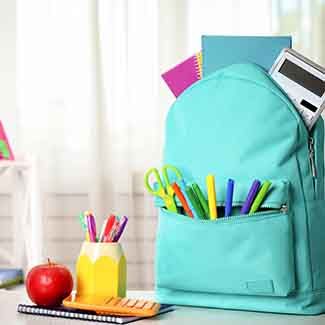
As the new school year gets underway, it’s a busy time for families. Shopping for school supplies, adjusting to a new routine, and perhaps even starting a new school. But have you stopped to consider your indoor air quality?
Good Air Quality Helps to Boost a Child’s Performance at School
Did you know that pollutants in the classroom can significantly impact how well your child performs?
Back in 2016, shortly after the SoCal gas leak in Aliso Canyon, a number of air purifiers were installed in classrooms close to the site. By the time the air purifiers were installed, the gas from the leak had disappeared, so the air purifiers were used to remove the everyday pollutants found in the classroom.
A research team from Annenberg Brown University (1) monitored children’s performance and found that within just a few months, test results in Math and English improved the same as if class sizes were reduced by a third.
Pollution Affects Children’s Mental Health
There is also evidence to suggest that removing pollutants from the air can help to improve mood and levels of depression for adolescents. A study from Sweden (2) found that children were more likely to use psychiatric medication when exposed to high levels of PM 2.5 and Nitrogen Dioxide. This fact is particularly important when we consider that according to NAMI (National Alliance on Mental Illness), suicide is the second leading cause of death in the US for people aged between 10 and 34.
Watch Out for The September Asthma Peak
If you or someone in your family suffers from asthma and allergies, now is the time to be extra vigilant. According to the experts, asthma rates for children reach their peak 17 days after Labor Day. So what’s happening in September that increases risk?
- Children are exposed to new viruses when they return to school.
- Ragweed, a common fall allergen, can be particularly problematic for asthmatics.
- Children switch from playing outside in the summer months to spending a lot more time indoors, which can also cause asthma to worsen.
- For many children, the stress of heading back to school can also cause their asthma to flare up.
- The school environment has many asthma, and allergy triggers that kids are not exposed to at home.
Add An Austin to Your Back-to-School Shopping List
Using a combination of medical-grade Certified HEPA Material and a unique carbon blend, our air purifiers will remove a wide range of airborne pollutants, including allergens, viruses, bacteria, chemicals, and VOCs.
Keep your family safe and help boost your child’s performance this school year and beyond with clean air from Austin Air. For more info on our air purifiers and what they can do for you, visit our website today.
(1) https://edworkingpapers.com/sites/default/files/ai20-188.pdf


Share:
Austin Becomes the Proud Clean Air Partner of The Atlanta Falcons
Austin Partners with the Indianapolis Colts